This post contains a position that I can only tenuously defend, but it is something I find myself thinking a lot about lately. I tried to work out some of the details with a more learned (please read that with two syllables) friend, but they were unconvinced as well. So what better option do I have than to post that bad idea publicly so it will forever be associated with me.
Here it is, plain and simple: the 90’s are the decade that art died.
Okay, so bear with me. To start, I have two disclosures. Well, one really, and then a thought that followed as a result of it. I’ve been rereading Infinite Jest. I read IJ in ‘08 when the web was atwitter about DFW because of his death, I’d never heard of the man before then. When I read it in ‘08, it took me probably 8 months to finish, but it also sparked something in me that I didn’t know existed before. I’m not sure I would really be able to call myself a reader before then, but this book woke something up in me. I’d say I understood about 30% of it at the time. I was 25. On the reread, I’ve found myself obsessing over how much he got right, the video content via ‘TP’ (teleputer) is an uncanny presage of Instagram-style front camera content with subtle beauty-related filters. Hell, he even blessed one of the ETA boy’s parents with the invention of Instacart:
Ingersoll’s parents founded the Rhode Island version of the service where you order groceries by TP and teenagers in fleets of station wagons bring them out to you, instead of supermarkets.
I guess what he failed to see is the globalization created by the Internet, or, put another way, the erasure of locality. There isn’t a ‘Rhode Island version’ of Instacart, there is the homogenous convenience of having groceries delivered, wherever you may find yourself. This is my segue into one of the pillars of the case I’m trying to make, but it’s an imperfect one because, prima facie, it’s stating the opposite of what I’m trying to say.
I. Monoculture, the end thereof
From an art/entertainment perspective, the 90’s were the zenith of monoculture in the US. The art that made its way into the collective psyche of the country was the last of which that was not fractured by the delocalization of the Internet. It’s subtle, and it may feel like what I’m saying is in conflict with my thesis, but return for a second to the Instacart point I made earlier: there isn’t a ‘Rhode Island version’ of Instacart because the Internet homogenized access, not culture. That uniform access destroyed the monoculture because of what we did with it: find our people—which we could do, unprecedentedly, because of its erasure of locality. But up to this point, monoculture had been snowballing for decades, making commercial success within reach for real weirdos who’d, today, be relegated to the artist class, toiling away in obscurity.
Exhibit I: Infinite Jest
Given this piece of art is the inspiration for this whole thesis, it of course
appears in the list of works of art by weirdos that had inordinate commercial
success. Imagine the author of a book today, which was deemed, “a
plutonium-dense, satirical quiz-kid opus that runs to almost a thousand pages
(not including footnotes)” making the morning talk show rounds. You can’t! Not
just because no one watches Good Morning America anymore, but because today this
type of book would be released quietly—especially given it was by a generally
unknown author at the time—to be chum to the Goodreads fishes. You might be
thinking, but, the Times and NPR and everyone else reviewed McCarthy’s (very
dense, abstract, and “arty”) final duology, but this isn’t a fair
counterexample. Cormac McCarthy, at the time, was the greatest living American
novelist. No, a fair comparison in my opinion is Greg Jackson’s Dimensions of a
Cave. Have you read it? Do you know anyone who has? I can tell you that you
certainly won’t find a review of it in the Times’ WeekenderDimensions did make Briefly Noted in The New
Yorker
upon its release, but it’s the only major publication I could find that
mentioned the book at all. It should be noted that Jackson is a regular
contributor of fiction to the magazine.
.
This is not because people don’t read anymore.
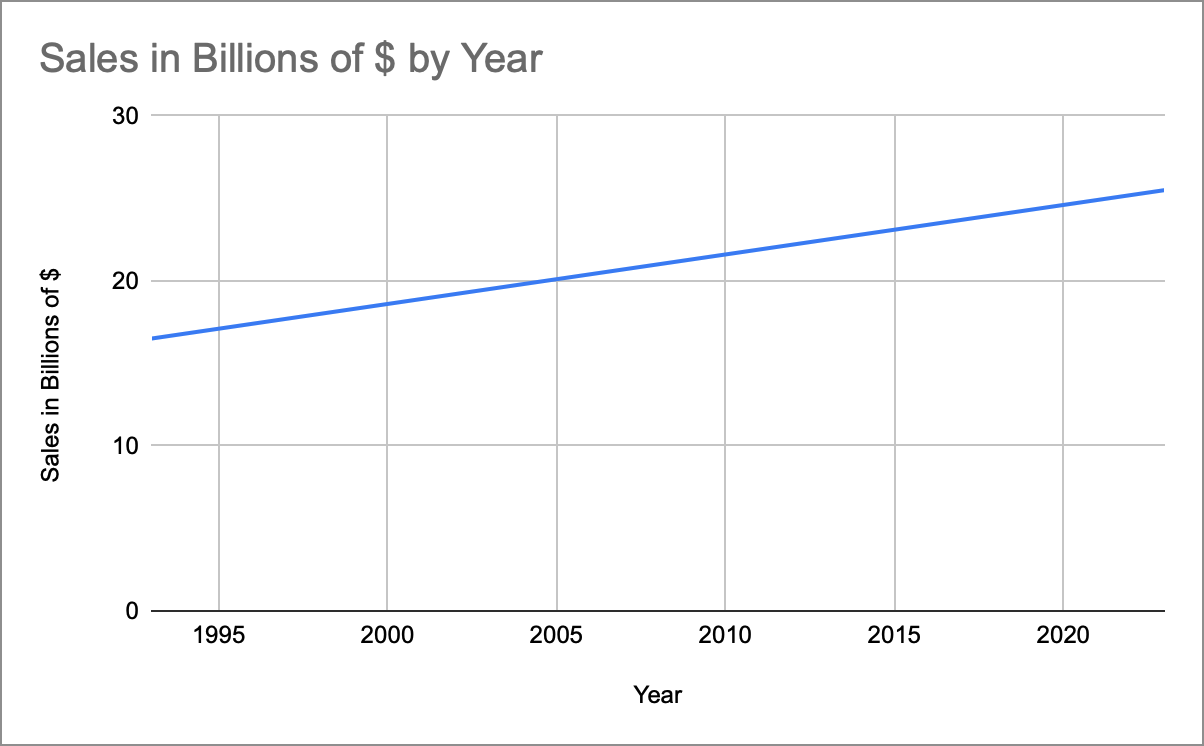
It’s really hard to compile this data as a regular guy, so I asked ChatGPT to help. It cited 12 sources for this data, from Statista, Association of American Publishers, and Publishers Weekly.
It’s because the Internet access fractured our monoculture into a million little pieces. The only fiction that floats to the top of our collective consciousness is fiction that has the most overlap in the millions of tiny bubbles comprising the Venn diagram of our current reality. Culture is determined a bell curve now, while it used to be by megaphone.
Exhibit II: Weirdo Cinema
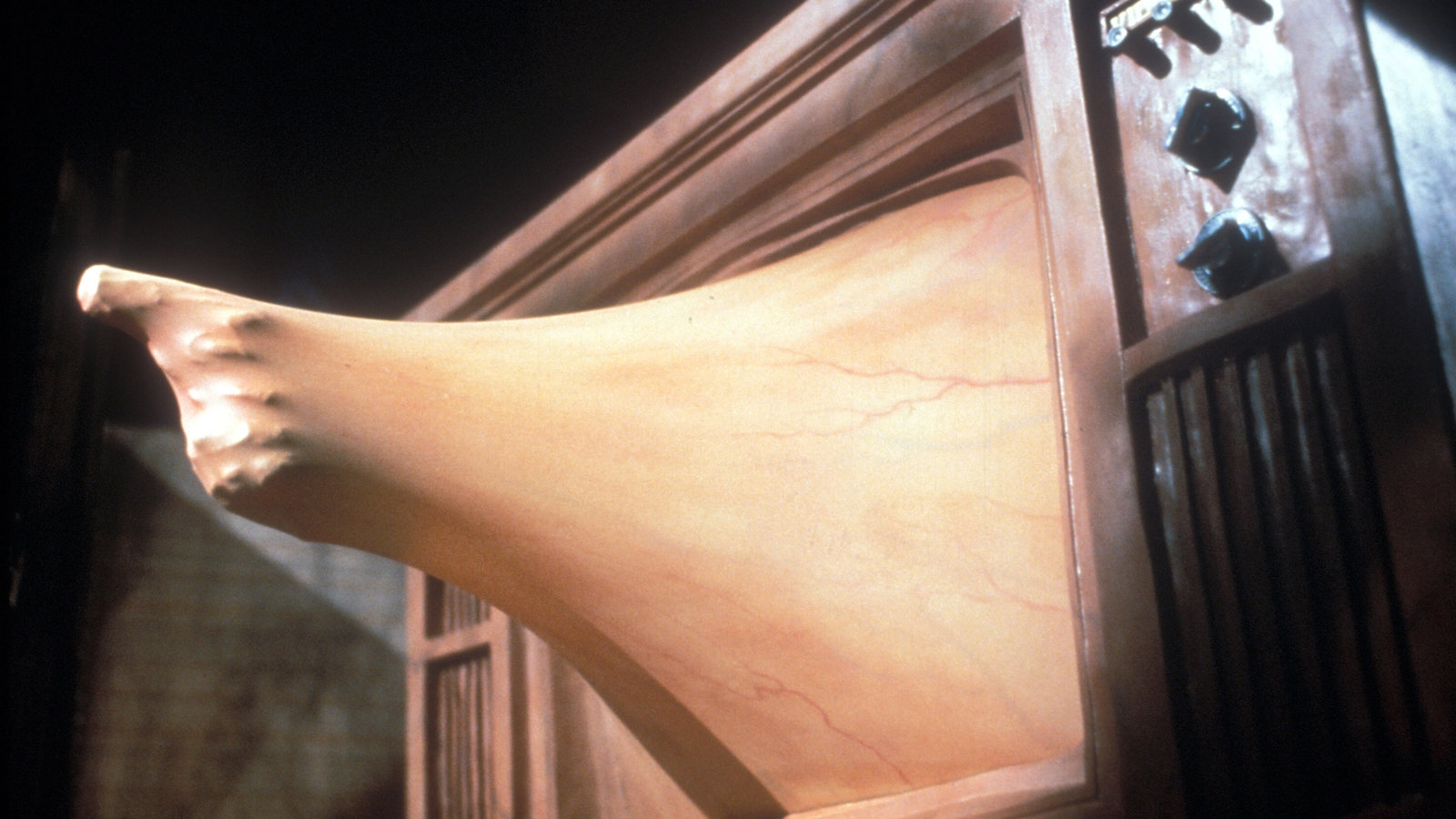
A biological television with a gun from David Cronenberg’s Videodrome
In the summer of 2005, I had a girl over to the apartment I shared with my friend Brian. Her, Brian, and I sat down and watched Videodrome, stone cold sober, all the way through. She had about 2-3 hours to hang, and that’s what I chose for us to do. When it was over, she stood up from the couch and said, “I think that’s the worst movie I’ve ever seen in my life” and left. I think if I asked her today if that was still true, she’d say yes (and I could, ask her, because we’re married and have 3 children now).
So, to be fair, Videodrome was released in the 80’s, in fact it looks like Cronenberg’s peak was really in that decade, but in the 90’s, he put out Crash and Existenz, Lynch put out Lost Highway, Wild at Heart, Twin Peaks, and Mulholland Drive, and Kubrick released Eyes Wide Shut. With Lynch’s films in particular, it’s an undeniable epoch in cinema. A time where free association visual art passed mainstream muster. It was a time where a film needn’t be tethered, not just a to linear narrative, but to a coherent one at all!

Recall that Twin Peaks had a reoccurring character who communed with a magic log.
Today, the only thing making its way into the megaplex is that same top of the bell curve bullshit, but it’s so much worse in the case of film. The Disney Corporation has a cultural hegemony on an entire standard deviation around the mean of that curve, and as studio power is centralized, art for art’s sake suffers. Today’s version of arthouse cinema is an aesthetic commercialized. A24 has more recognition than the films it produces because it represents one of the fractures of today’s culture. I don’t think even A24 would put out Mulholland Drive today, excepting the fact that it’s David Lynch of course, and in ‘99 it was distributed by Universal!
With the end of a monoculture came the need for the capitalist class of the art world to adapt, and the natural adaptation was to stop scaling up and start scaling out. But the result of scaling out, on smaller and smaller units, was that the margin between profit and loss shrunk to damn near nothing. This has a multifaceted effect. In the old days, a studio could afford to lob some real capital-A art into the monoculture whether or not it was ever intended to be commercially successful. For instance, during the 90’s, when Universal distributed Mulholland Drive, they were buoyed by the blockbuster success of the first two Jurassic Park films, making a Lynchian nonsense-fest a worthwhile endeavor. But also, Mulholland Drive was profitable! Because we as Americans were amenable to the nonsense in the first place! And this is exactly my point. David Lynch is not to be fucked with. If Universal came in with focus groups wanted to audience test the film, he wouldn’t have abided.
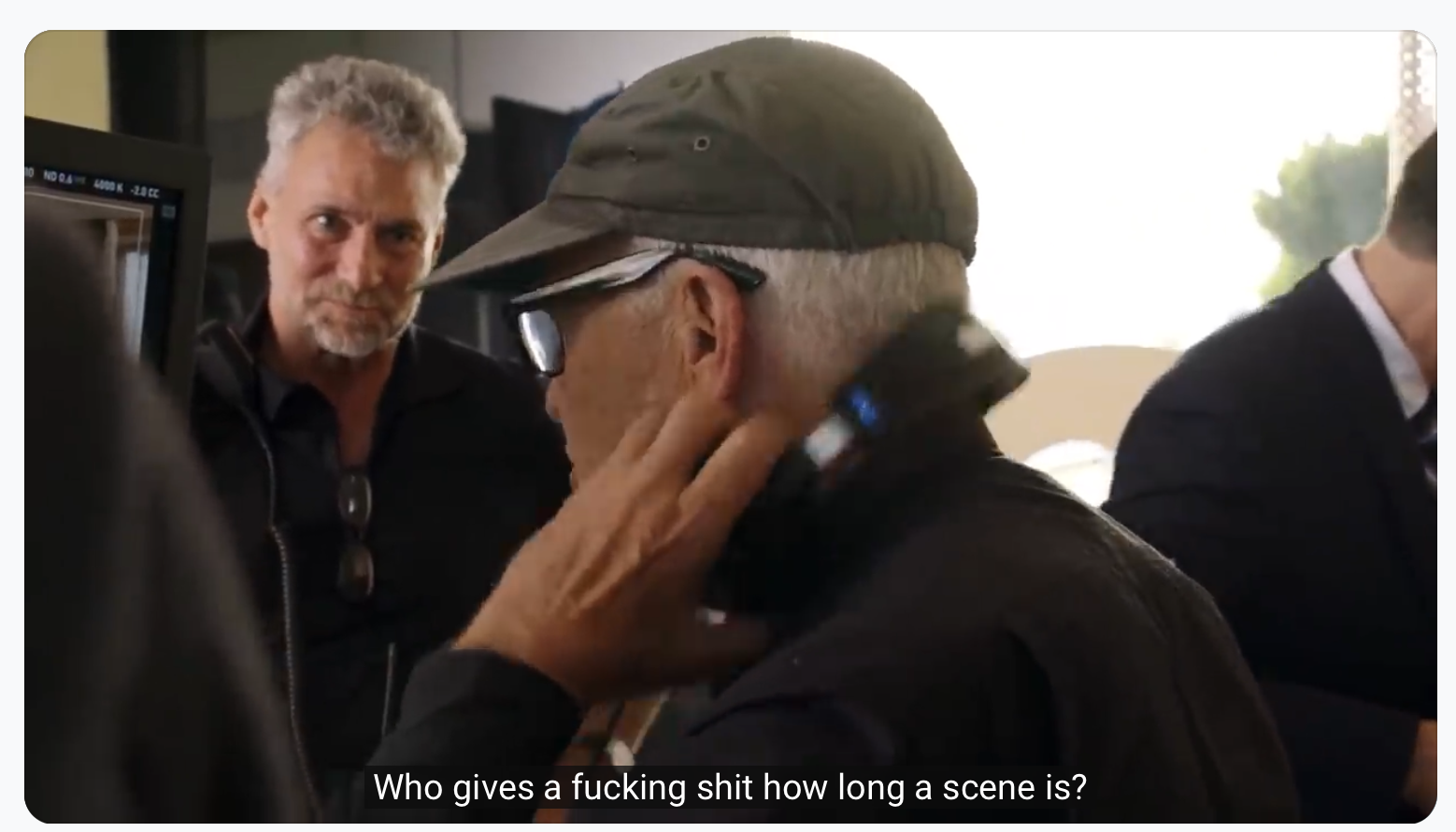
“Fuckin’ A, man. Who gives a fucking shit how long a scene is.”
Mulholland Drive is art in the pure sense. An unalloyed vision. And we all went to see it.